



Professional Water Damage Restoration for Hardwood Floors in Jacksonville
Hardwood floors are a beautiful, comfortable, and valuable addition to your home. Unfortunately, water leaks, rain, burst pipes, flooding, and other plumbing issues can damage hardwood flooring. This can be a particular concern for residents in Jacksonville, where heavy rains and storms may expose homes to unwanted water. When moisture gets into the wood, it can cause swelling, warping, discoloration, and unpleasant odors. That is why water damage to hardwood floors should be addressed promptly.
Professional restoration can help prevent wet wood floors from warping and protect the materials beneath them. Understanding the causes, warning signs, and restoration process can help you decide when it is time to contact a professional for water-damaged flooring.
Common Causes of Hardwood Floor Water Damage
Hardwood is a natural material that can absorb moisture. Even a small amount of standing water may cause problems if it remains on the floor or seeps beneath the boards.
Common causes of hardwood floor damage in Jacksonville include:
- Plumbing leaks: Broken pipes, leaking faucets, or damaged water connections can allow moisture to collect on or beneath wood flooring.
- Heavy rain and storms: Rainwater entering through windows, doors, or the roof can reach indoor flooring.
- Leaking appliances: Dishwashers, washing machines, dryers, and refrigerators may leak water onto nearby hardwood floors.
- Flooding: Floodwater can soak wooden floors and the layers underneath them.
- Condensation or drainage problems: Poor drainage and excess indoor moisture can contribute to damp flooring.
Identifying the source and type of water is an important first step in choosing the right restoration approach.
Signs Your Hardwood Floors Have Water Damage
Water damage is not always immediately visible. Moisture can collect beneath the flooring, and surface changes may appear only after the damage has progressed.
- Cupping: The edges of floorboards rise higher than the center because of uneven moisture levels.
- Warping or uneven boards: Wooden boards may no longer sit flat against the subfloor.
- Discoloration: Dark marks, stains, or patches may appear on the surface.
- Soft or spongy areas: The floor may feel soft or give slightly when you walk across it.
- Musty odors: A lingering smell may indicate trapped moisture or possible mold growth.
- Loose floorboards: Boards may lift or loosen after prolonged exposure to water.
If you notice these signs, a qualified restoration professional can inspect the affected flooring and help determine how far the moisture has spread.
Professional Water Damage Restoration: Why It Is Important
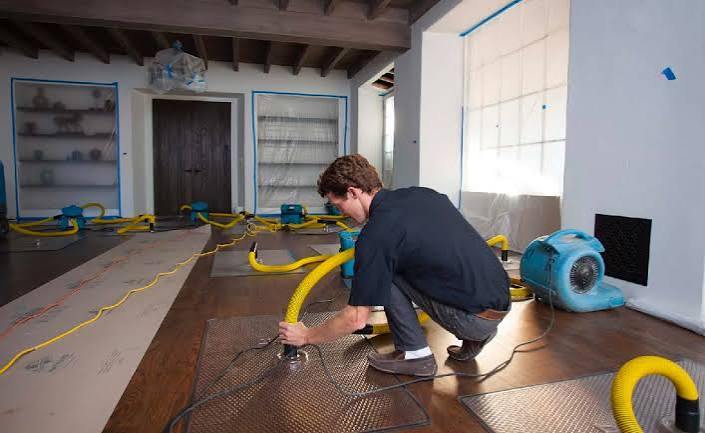
Some homeowners try to dry wet floors with household fans or other equipment. This may help remove surface moisture, but it usually cannot address water trapped beneath the hardwood or inside the subfloor.
Restoration specialists use moisture meters, professional drying systems, and other equipment to locate and address concealed moisture. Professional restoration for water-damaged hardwood floors can:
- Help extract moisture from flooring and nearby materials.
- Reduce the risk of mold and other microbial growth caused by lingering moisture.
- Limit further swelling, warping, and deterioration.
- Identify hidden moisture beneath floorboards.
- Improve the chance of saving hardwood flooring instead of replacing it.
Taking action quickly can make the restoration process more manageable and help prevent additional damage.
Step-by-Step Hardwood Floor Water Damage Restoration Process
Professional restoration involves drying the flooring, checking for remaining moisture, and assessing whether the damaged materials can be repaired or need replacement.
1. Identify and Stop the Water Source
The source of the water must first be located. If the problem is a burst pipe, faulty appliance, or storm-related water entry, the leak should be stopped or repaired before restoration continues.
2. Water Removal and Extraction
Restoration professionals use suitable extraction equipment to remove standing water. Prompt extraction helps limit how much moisture the hardwood boards and subfloor absorb.
3. Moisture Inspection
Specialists use moisture meters and other inspection tools to measure moisture levels in the hardwood, subfloor, nearby walls, and surrounding materials. This helps reveal water that may not be visible.
4. Professional Drying and Dehumidification
Air movers and dehumidification equipment help remove moisture from the affected area. When necessary, a floor-drying system may be used to draw moisture from beneath the hardwood.
5. Cleaning and Sanitizing
After drying, affected surfaces are cleaned to remove dirt, odors, and possible contaminants. If mold is identified, appropriate remediation may also be necessary.
6. Hardwood Floor Repair or Replacement
Once the flooring is dry, its condition can be assessed. Some boards may be suitable for sanding and refinishing, while severely damaged, separated, or deteriorated boards may need to be replaced.
Preventing Long-Term Hardwood Floor Water Damage
Prevention can help reduce the risk of expensive flooring repairs in Jacksonville. Consider these practical steps:
- Inspect plumbing connections regularly for leaks.
- Check the roof, windows, and doors for possible water entry.
- Maintain air-conditioning equipment and household drainage systems.
- Wipe up spills and standing water as soon as possible.
- Check the areas around washing machines and dishwashers for signs of leaks.
- Maintain suitable indoor humidity levels.
- Arrange a professional inspection after major leaks or flooding.
These simple measures can help protect hardwood flooring and reduce the chance of future moisture problems.
Why Choose Tech Vine for Water Damage Restoration?
Water damage can affect more than the appearance of your home. Moisture trapped beneath hardwood flooring may damage the subfloor and create conditions that support mold growth. A professional assessment can help locate hidden moisture and identify an appropriate restoration approach.
Tech Vine Technology provides information about water damage restoration options to help homeowners understand professional cleanup and recovery. If your hardwood floors have been affected by water, explore the available service information to learn more about the restoration process.
Final Thoughts
Hardwood flooring can add beauty and value to your home, but contact with water can quickly affect its appearance and durability. Cupping, discoloration, musty odors, and loose boards are warning signs that should not be ignored. Even a small leak can become a larger problem when moisture remains trapped beneath the surface.
Professional restoration for water-damaged hardwood floors focuses on locating moisture, drying affected materials, and determining whether the flooring can be saved or needs replacement. For Jacksonville homeowners, a timely response and appropriate repairs can help protect the comfort of the home and preserve hardwood flooring where possible. Visit Tech Vine Technology to learn more about water damage restoration.