


7 Crucial Reasons to Hire Basement Water Damage Cleanup Professionals
Hiring basement water damage cleanup professionals is your absolute best line of defense when walking down your stairs only to hear an alarming splash. Whether caused by a sudden burst pipe, heavy seasonal rain, or a failed sump pump, standing water inside your lower level can turn your home upside down overnight.
In the panic of the moment, your first instinct might be to grab a mop, drag out a wet vac, and set up a few household fans. However, surface-level drying barely touches the real problem. Water rapidly migrates into hidden wall cavities, porous subfloors, and foundation concrete.
At Techvine, we’ve seen how quickly minor leaks can escalate into major structural disasters. Calling certified basement water damage cleanup professionals immediately isn’t just a convenience- it is the single most critical step in saving your property from long-term destruction.
The Hidden Dangers of DIY Basement Water Cleanup
It’s easy to underestimate the behavior of water. Within minutes of a flood, moisture saturates every porous material it touches. Within 24 to 48 hours, mold spores begin colonizing damp surfaces like drywall, insulation, and carpet padding.
Key Risk: Water is categorized by its purity. Category 1 (clean tap water) rapidly degrades into Category 2 (gray water) or Category 3 (black water contaminated with bacteria and sewage) if left standing. Attempting to clean contaminated water without industrial protective equipment poses severe health risks.
Why Hiring Basement Water Damage Cleanup Professionals is Essential
1. High-Powered Industrial Water Extraction
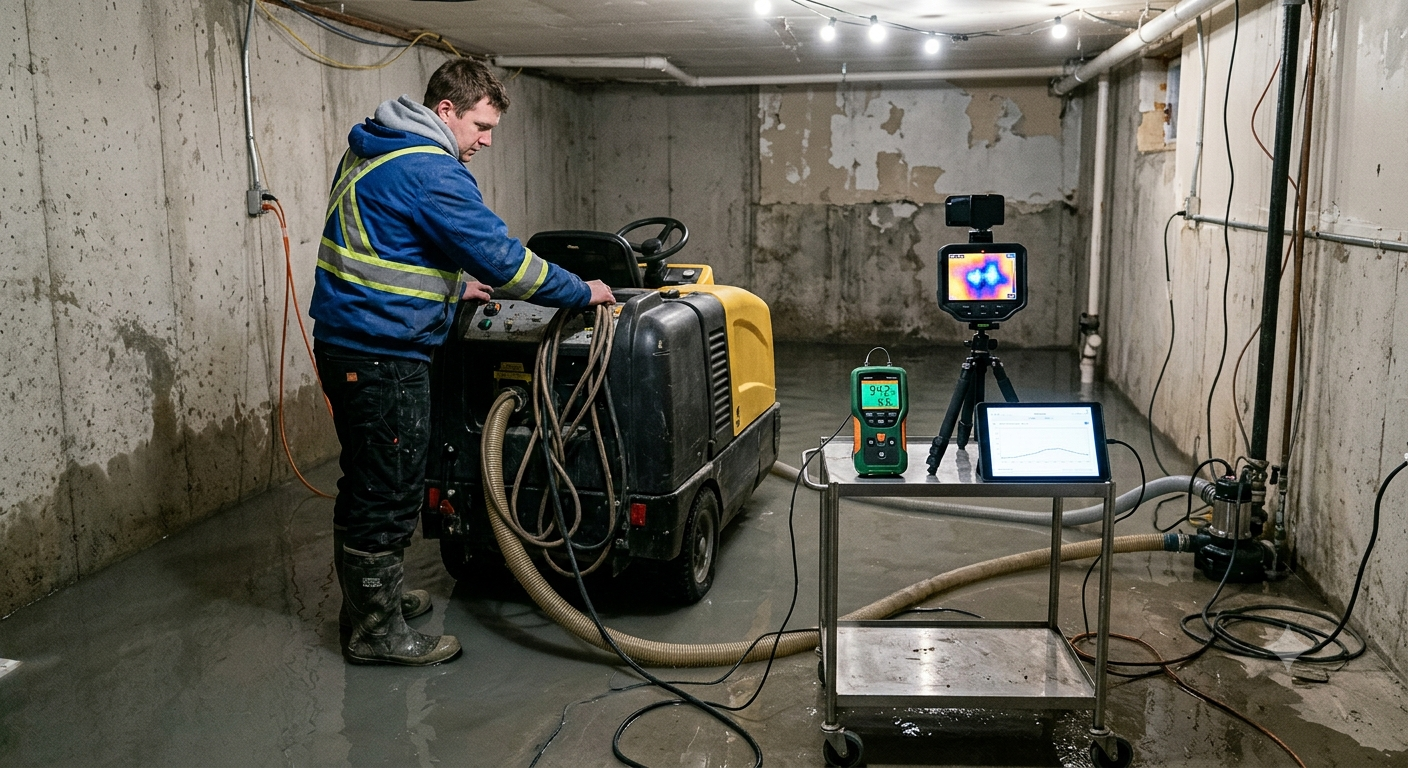
A standard wet/dry shop vac can pull a few gallons at a time, but it lacks the horsepower required for deep extraction. Professional restoration teams utilize truck-mounted extraction units and commercial submersible pumps capable of removing thousands of gallons of water per hour, stopping saturation in its tracks.
2. Advanced Moisture Detection Equipment
Water hides where the human eye cannot see. Moisture trapped behind baseboards, underneath subfloors, or inside foundation wall cracks often goes unnoticed during DIY cleanup. Certified experts use infrared thermal imaging cameras and penetrating moisture meters to map out hidden damp zones with precision.
3. Rapid Mold Prevention & Antimicrobial Sanitization
Mold growth begins in as little as 24 hours in high-humidity environments. Simply drying the floor isn’t enough; surfaces must be treated with EPA-registered antimicrobial and antifungal solutions to sterilize the space and stop spore growth before it takes root.
4. Structural Integrity Safeguards
When wooden floor joists, wall studs, and drywall absorb water, they lose structural strength, expand, and warp. Professionals understand how to dry structural framing using Low-Grain Refrigerant (LGR) dehumidifiers and high-velocity air movers, preserving the core framework of your home.
5. Hazardous Contaminant Remediation
If your basement flooded due to storm runoff or a sewer line backup, the water carries harmful pathogens, heavy metals, and dangerous bacteria. Basement water damage cleanup professionals follow strict OSHA and IICRC protocols to safely clean, sanitize, and dispose of biohazardous materials.
6. Seamless Insurance Claims Support
Filing an insurance claim after a flood can be overwhelming. Professional restoration companies provide comprehensive documentation, including detailed moisture readings, asset loss inventories, and photo evidence that insurance adjusters require to approve full payouts.
7. Significant Long-Term Cost Savings
While hiring professionals incurs an upfront cost, it pales in comparison to the tens of thousands of dollars required to remediate structural rot, foundation failure, or widespread mold infestations months down the road.
Immediate Action Guide: What to Do Before Help Arrives
While you wait for a certified extraction crew to get on-site, taking the right immediate safety steps makes a massive difference:
| What to DO | What NOT to Do |
| Shut off power to the basement at the main breaker if safe. | DO NOT enter standing water if outlets are submerged. |
| Turn off the main water valve if a pipe burst. | DO NOT use standard household vacuums to extract water. |
| Document everything with detailed photos and video. | DO NOT turn on HVAC systems, which can spread mold spores. |
| Move lightweight valuables to higher ground if accessible. | DO NOT leave wet carpets sitting directly on subfloors. |
Protect Your Home with Techvine Experts
A flooded basement is a race against the clock. Every hour water lingers in your foundation increases the risk of mold, weakened framing, and costly repairs.
When disaster strikes, relying on basement water damage cleanup professionals ensures your home is restored safely, thoroughly, and correctly the first time. Trust Techvine to keep your home protected with industry-leading insights, disaster readiness guides, and expert restoration solutions.