


Don’t Let a Leak Sink Your Home: The Ultimate Guide to Water Restoration in My Area
Water Restoration in my area – It’s every homeowner’s nightmare. You come home from work or wake up in the middle of the night to the sound of rushing water, only to find your living room looking like a shallow wading pool. Whether it’s a burst pipe in the dead of winter, a malfunctioning water heater, or flash flooding from a severe storm, water damage is stressful, invasive, and moves incredibly fast.
Your first thought is likely: “I need to find Water Restoration in my area before this gets worse.” And you would be right. Acting within the first 24 to 48 hours is the difference between a straightforward cleanup and a massive, hazardous mold remediation project.
What to Expect During the Process
When you call in the pros, they don’t just show up with a few shop vacs and fans. Legitimate professionals follow a strict, scientific protocol set by the IICRC (Institute of Inspection, Cleaning and Restoration Certification). Here is how the recovery process actually works:
- Inspection and Assessment: The crew identifies the source of the leak, categorizes the water’s contamination level (ranging from “clean” pipe water to highly toxic “black” sewage water), and maps out the moisture spread using thermal imaging.
- Water Extraction: Using powerful truck-mounted vacuums and submersible pumps, they remove all standing water immediately to stop further absorption.
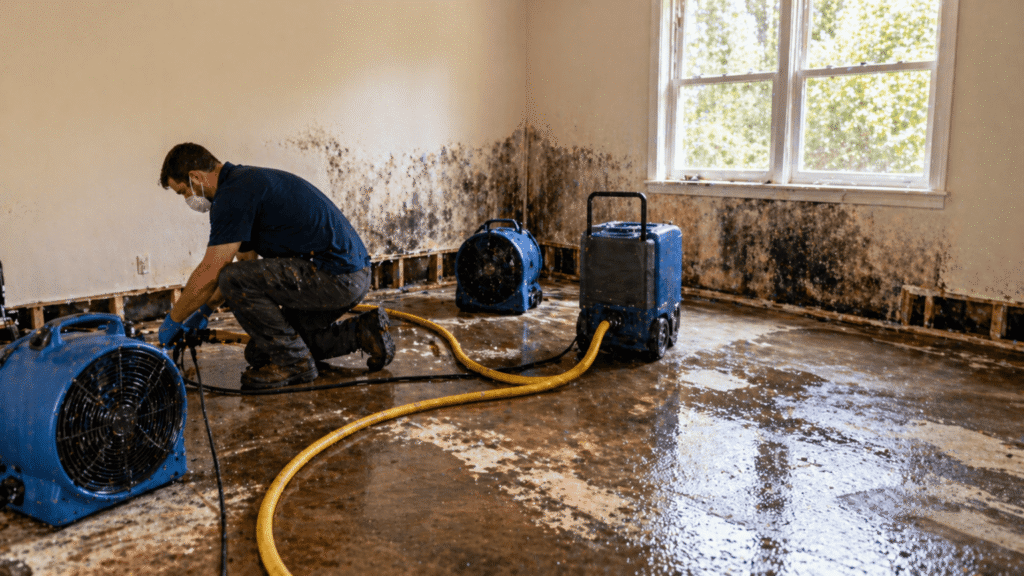
- Drying and Dehumidification: This is the loudest phase of the job. Heavy-duty air movers and commercial dehumidifiers run continuously to pull deep moisture out of your drywall, wood framing, and subfloors.
- Cleaning and Sanitizing: Every affected surface is scrubbed, HEPA-vacuumed, and treated with commercial antimicrobials to prevent mold growth and eliminate odors.
- Reconstruction: Finally, any unsalvageable materials—like soaked carpet pads or ruined drywall—are torn out and replaced, returning your home to its pre-loss condition.
Let’s Talk Costs (and How to Keep Them Down)
Water extraction is a serious undertaking. As of 2026, the national average for water damage restoration in the US sits around $3,846, generally ranging between $3 and $7.50 per square foot.
If you are hoping to get Water Restoration at cheaper price, your absolute best strategy is early intervention. The faster you extract the standing water, the less structural drying, demolition, and reconstruction you will have to pay for later. Additionally, you should check your homeowners insurance policy immediately. Most standard US policies cover sudden, accidental interior water damage (like a burst supply line), though external flood damage typically requires a separate flood insurance policy.
How to Find the Right Help
When your house is soaking wet, you don’t have the luxury of time to interview a dozen different contractors. But you still want the Best water Restoration expert handling your property to ensure it’s safe for your family to live in again.
Here is what you should look for when making that emergency call:
- IICRC Certification: This is the gold standard for the mitigation industry. It ensures the technicians actually know the science of psychrometrics (the study of moist air).
- 24/7 Emergency Dispatch: Water doesn’t wait for standard business hours. If a company can’t deploy a team to your house today, hang up and keep calling.
- Insurance Coordination: A top-tier contractor will speak directly with your insurance adjuster and use industry-standard software to document the damage meticulously, ensuring your claim is processed smoothly.
If you find yourself ankle-deep in water, don’t panic. Shut off your main water valve, secure your valuables, and leave the heavy lifting to the certified professionals.