


What to Do When Water Strikes: The Ultimate Guide from a Licensed and Insured Water Damage Restoration Company
Licensed and Insured Water Damage Restoration Company Picture this: You wake up at 2:00 AM to the sound of rushing water, only to step off your bedroom carpet into two inches of standing water. Or perhaps a sudden summer squall tears through your neighborhood, sending torrential rain cascading through your roof and straight into your ceiling. Water damage is one of the most sudden, destructive, and emotionally draining emergencies a property owner in the United States can face.
In those frantic early hours, your immediate instinct might be to grab a mop, rent a couple of carpet fans from a big-box store, or call the first local handyman you find online. However, cutting corners during a water crisis can cost you tens of thousands of dollars in hidden structural rot, denied insurance claims, and toxic mold growth down the road.
To protect your home, your family’s health, and your financial well-being, hiring an Insurance Approved Water Damage Restoration Contractor is the single most important decision you can make. In this guide, we will walk through why rapid professional mitigation is essential, how the insurance claims process works behind the scenes, and why working with a Licensed and Insured Water Damage Restoration Company gives you complete peace of mind.
The Golden Window: Why Speed is Everything
When water enters porous building materials—like drywall, carpet padding, subflooring, and framing timber—a timer immediately starts ticking. In the restoration industry, the first 24 to 48 hours are known as the critical mitigation window.
0 to 24 Hours: Water spreads rapidly throughout your property, soaking insulation, ruining furniture, and bleeding up drywalls through capillary action. Wood begins to swell, electrical hazards increase, and hardwood floors start to cup.
24 to 48 Hours: Microscopic mold spores—which exist naturally everywhere in the air—activate when relative humidity jumps above 60%. Mold colonies begin to colonize wet drywall, carpet, and wood. Drywall begins to sag under trapped weight.
48 Hours to 1 Week: Mold growth explodes across affected areas, potentially releasing dangerous mycotoxins into your indoor air. Demolition costs skyrocket because materials that could have been dried in place must now be torn out and discarded as hazardous waste.
Because this window is so brief, you cannot afford to wait days while negotiating with uncertified contractors. You need rapid emergency water extraction and industrial drying equipment deployed immediately.
Why You Need an Insurance Approved Contractor
Navigating a homeowners insurance claim during a crisis can feel like trying to speak a foreign language while your living room is under water. Standard US homeowners insurance policies (such as HO-3 policies) generally cover sudden and accidental water damage—such as a burst supply line, a broken washing machine hose, or an overflowing water heater. However, insurance carriers hold strict standards regarding how damage is documented, measured, and billed.
This is where an Insurance Approved Water Damage Restoration Contractor becomes your greatest asset.
1. Industry Standard Software (Xactimate)
Insurance claims adjusters do not accept random paper estimates or guesswork pricing. They rely on Xactimate, a standardized pricing software that calculates line-item costs for labor, equipment, and materials based on your exact zip code. An approved contractor drafts their scope of work directly within Xactimate, preventing lowball disputes and speeding up your claim payout.
2. Comprehensive Moisture Documentation
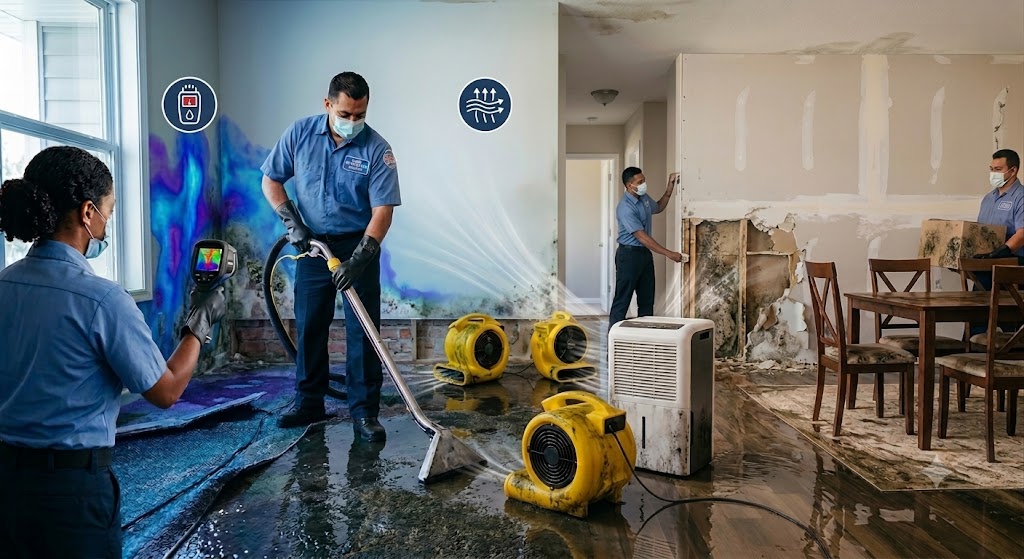
Insurance companies will not reimburse a claim without verifiable proof. Approved contractors use calibrated moisture meters, thermo-hygrometers, and FLIR thermal imaging cameras to create daily moisture logs. This scientific data proves to your insurance adjuster exactly why specific drywall had to be removed or why commercial dehumidifiers were required to run for four straight days.
3. Direct Billing and Reduced Out-of-Pocket Stress
Working with an unapproved vendor often means you have to pay thousands of dollars out of pocket upfront and hope your insurance company reimburses you later. An Insurance Approved Water Damage Restoration Contractor works directly with your insurance company’s claims department, handling direct billing so that you generally only pay your policy deductible.
The Hidden Risks of Unlicensed Labor
In the aftermath of freeze events, severe storms, or localized flooding, “storm-chasing” workers and unlicensed handymen often travel from neighborhood to neighborhood offering quick fixes. While their lower estimates might look like an easy way to get water restoration at a cheaper price, hiring uncertified labor is a massive risk to your home’s equity.
Partnering with a Licensed and Insured Water Damage Restoration Company provides essential legal and financial protections:
General Liability Protection: Water mitigation involves heavy machinery, high voltage, and structural tear-out. If an uncertified worker accidentally cuts through a hidden electrical line or ruptures a gas pipe, an insured company’s policy covers the property damage—not your personal insurance policy.
Workers’ Compensation: Restoration work is physically demanding. Technicians work on slick surfaces and navigate dark, cramped crawlspaces. If an employee of an uninsured contractor gets hurt on your property, you could be held personally liable for their medical bills and lost wages.
Compliance with Local Building Codes: A licensed company adheres to state contracting laws and municipal building codes. They understand when permits are required for structural repairs, electrical rewiring, or plumbing overhauls, ensuring your home remains fully compliant and insurable.
The 5-Step Professional Restoration Process
What actually happens when a professional restoration team arrives at your door? Top-tier technicians follow strict guidelines established by the IICRC (Institute of Inspection, Cleaning and Restoration Certification).
[1. Emergency Assessment] ➔ [2. Water Extraction] ➔ [3. Structural Containment] ➔ [4. Applied Drying] ➔ [5. Sanitizing & Repair]
Emergency Inspection & Classification: Technicians evaluate structural safety and categorize the water contamination level:
Category 1 (Clean Water): From broken supply pipes or clean sink overflows.
Category 2 (Gray Water): Washing machine discharge or sump pump backups containing mild chemical/biological contaminants.
Category 3 (Black Water): Highly toxic sewage backups or river floodwaters containing severe pathogens requiring specialized hazardous material handling.
Commercial Water Extraction: Powerful truck-mounted extraction units and weighted deep-extraction tools remove standing water from carpets, hardwood, and subfloors far faster than consumer equipment can.
Structural Tear-Out & Containment: Non-salvageable materials (such as ruined carpet padding or soaked acoustic insulation) are removed. Plastic containment barriers and negative air scrubbers are installed to prevent dust and mold spores from migrating into clean living areas.
Applied Structural Drying (Psychrometrics): Technicians strategically position high-velocity air movers alongside commercial LGR (Low Grain Refrigerant) dehumidifiers. This scientific process pulls trapped moisture out of walls and framing timber without causing structural warping.
Sanitizing & Mold Prevention: All affected surfaces are treated with EPA-registered antimicrobials, fungicides, and deodorizers to eliminate bacteria, suppress mold growth, and remove musty smells.
Smart Steps Homeowners Can Take Immediately
While you wait for your restoration crew to arrive, taking these quick steps can help minimize overall loss:
Shut off the main water valve: Locate your home’s main water line shut-off and close it immediately to halt the flooding.
Turn off power to wet zones: If water is coming from an overhead ceiling or pooling near electrical outlets, shut off circuit breakers to prevent electrocution hazards.
Document everything: Take high-resolution photos and video of all damaged structure, furniture, electronics, and personal property before anything is discarded.
Keep salvageable items elevated: Lift furniture legs off wet carpet using aluminum foil or wooden blocks to prevent wood stain from bleeding permanently into flooring.
Final Thoughts
Water damage is overwhelming, but you don’t have to navigate the cleanup and claim process alone. By hiring a Licensed and Insured Water Damage Restoration Company that operates as an Insurance Approved Water Damage Restoration Contractor, you ensure your property is scientifically dried, fully protected, and restored to pre-loss condition without unnecessary financial delays. When disaster strikes, trust certified experts to reclaim your home and restore your peace of mind.